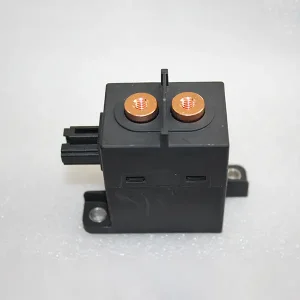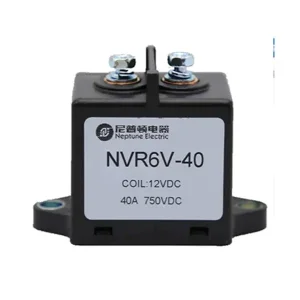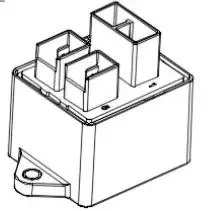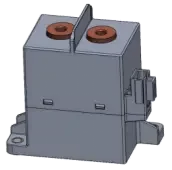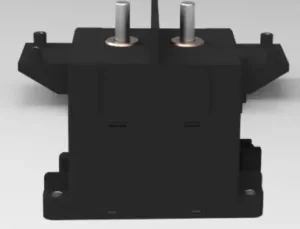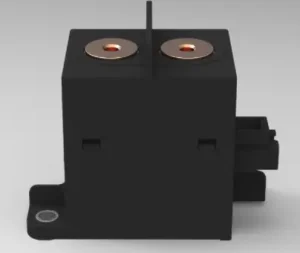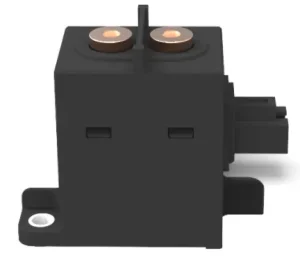
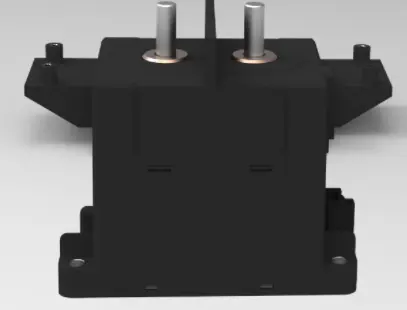
Wholesale NVR6V-500 DC relay used for new energy vehicle Supplier, Factory

NVR6V-500 is a ceramic-sealed industrial-grade high-voltage DC relay, specifically designed for large current switching control in 1500V and below high-voltage DC scenarios. This high-voltage direct current relay adopts the permanent magnet arc blowing technology. The contacts are sealed within a ceramic cavity and filled with gas with excellent arc extinguishing properties. The protection level reaches IP67, meeting the RoHS 2.0 environmental protection requirements. It can be widely adapted to high-reliability scenarios such as energy storage systems, new energy vehicles, DC chargers, and photovoltaic grid connection. As a 500A-level high-power direct current relay, it features lightweight design, high impact resistance, and no polarity load connection. It supports customization of auxiliary contacts, installation terminals, and other parameters, fully meeting the differentiated usage needs of different industrial scenarios.

Product Description

NVR6V-500 is a ceramic-sealed industrial-grade high-voltage DC relay, specifically designed for large current switching control in 1500V and below high-voltage DC scenarios. This high-voltage direct current relay adopts the permanent magnet arc blowing technology. The contacts are sealed within a ceramic cavity and filled with gas with excellent arc extinguishing properties. The protection level reaches IP67, meeting the RoHS 2.0 environmental protection requirements. It can be widely adapted to high-reliability scenarios such as energy storage systems, new energy vehicles, DC chargers, and photovoltaic grid connection. As a 500A-level high-power direct current relay, it features lightweight design, high impact resistance, and no polarity load connection. It supports customization of auxiliary contacts, installation terminals, and other parameters, fully meeting the differentiated usage needs of different industrial scenarios.

Performance Indicators
Category Performance indicators
Electrical lifespan (resistive load) 60V DC/500A connection: 10,000 times; 1000V DC/500A interruption: 200 times; 1500V DC/500A interruption: 100 times
Mechanical lifespan 200,000 times
Insulation resistance Disconnecting between contacts / Closing contacts and coil: Before the test, ≥ 1000 MΩ @ 1000 V DC; After the test, ≥ 50 MΩ @ 1000 V DC
Medium withstand pressure Between the disconnected contacts: Before the test, ≥ 3000V AC (50/60Hz, 1 minute); After the test, ≥ 2250V AC; Between the closed contacts and the coil: Before the test, ≥ 2500V AC; After the test, ≥ 1875V AC
Environmental resistance performance Mechanical impact strength: 50G; Stability: 20G; Random vibration: 10 - 2000Hz / 5G; Working/storage temperature: -40°C to +85°C; Supports use at altitudes below 4000m.

Installation Requirements

  • Install vertically, using M6 specification installation screws. The locking torque should be controlled within 6 to 8 N·m to avoid damaging the housing due to excessive tightness.
  • The thickness of the copper busbar at the load end is recommended to be 8 to 10 mm. The opening size of the holes should be matched according to the terminal specifications: M6 terminals have a φ6.0 to 6.5 mm hole, M8 terminals have a φ8.0 to 8.5 mm hole, and M10 terminals have a φ10 to 10.5 mm hole.
  • It is not recommended to install two copper busbars on the same side terminal to avoid high-voltage short circuiting and sparking.
  • Avoid installing near strong magnetic fields (around transformers and magnets) and heat-generating devices.
  • When the altitude exceeds 2000m, the usage should be reduced according to the requirements of IEC 60947-1 standard.

Usage and Maintenance Tips

  • The static contacts are made of pure copper. If the storage time exceeds 3 months, the parameters need to be re-tested before use; if the contacts are oxidized and discolored, they need to be ground to remove the oxide layer before being put back into use.
  • The working environment temperature should not exceed 130°C for long-term operation, and should not exceed 180°C for short-term operation. Temperatures above 180°C may cause the relay to fail.
  • In overcurrent scenarios, a suitable specification fuse needs to be matched: when the current exceeds 8000A, if the fuse fails to melt in time, the contacts may open, and in extreme cases, there is a risk of fire and explosion. A complete overcurrent protection mechanism needs to be provided.
  • For inductive loads (L/R ≥ 1ms), a surge absorption device needs to be connected in parallel; otherwise, it will reduce the electrical lifespan and cause poor disconnection.
  • If the relay falls, it is generally prohibited to use it again to avoid internal structure damage leading to faults.
Frequently Asked Questions (FAQ)
Q1: What are the primary application scenarios for the NVR6V-500 DC relay?

The NVR6V-500 is ideal for high-reliability applications, including industrial and commercial energy storage systems, new energy vehicles, high-power DC charging stations, and 1500V photovoltaic grid-connected systems.

Q2: What are the installation torque and orientation requirements?

The relay must be installed vertically using M6 specification screws. The locking torque should be strictly maintained between 6 to 8 N·m to protect the housing from damage due to over-tightening.

Q3: Can the relay be used in high-altitude environments?

Yes, it supports standard operation at altitudes below 4000m. However, when the working altitude exceeds 2000m, performance derating must be applied in accordance with the IEC 60947-1 standard.

Q4: How should copper busbars be configured for connection?

We recommend using a copper busbar with a thickness of 8 to 10 mm. Ensure the hole sizes correspond correctly with the terminals (M6: φ6.0–6.5 mm; M8: φ8.0–8.5 mm; M10: φ10–10.5 mm), and avoid installing two busbars on the same side terminal.

Q5: What are the limits for operating temperatures and overcurrent events?

The maximum continuous operating temperature is 130°C (up to 180°C for short-term periods). For overcurrent safety, a matched fuse must be used; if currents exceed 8000A without rapid fuse clearing, contacts may separate, presenting fire or explosion risks.

Q6: What maintenance is required for oxidized static contacts or after a physical drop?

If contacts oxidize or discolor during storage (exceeding 3 months), they must be ground to remove the oxide layer and re-tested. If the relay is dropped, reuse is strictly prohibited to prevent potential failures from undetected internal structural damage.
Related Products